
AI Wellness Coach vs Health Apps: Why Most Trackers Fail
77% of people abandon health apps within two weeks. Learn why passive tracking fails and how proactive AI coaching keeps you on track.
You downloaded the app. You logged breakfast. Maybe even lunch. By Wednesday, the app sat unopened. By next month, you deleted it.
Sound familiar? You're not alone — and it's not your fault.
The Health App Graveyard
Research consistently shows that roughly 77% of people stop using health and fitness apps within two weeks of downloading them. Not two months. Two weeks.
The pattern is predictable: initial excitement, a few days of diligent logging, then the friction builds. You forget to open the app after dinner. You skip a workout and feel guilty logging it. The app doesn't notice. It doesn't care. It just sits there, silently waiting for you to come back.
Most health trackers are built around a fundamentally flawed assumption: that you will always initiate. You open the app. You log the meal. You record the workout. Every single interaction depends on you remembering, wanting to, and taking the time to do it.
That's a lot of willpower for something that's supposed to make your life easier.
Why Passive Tracking Fails
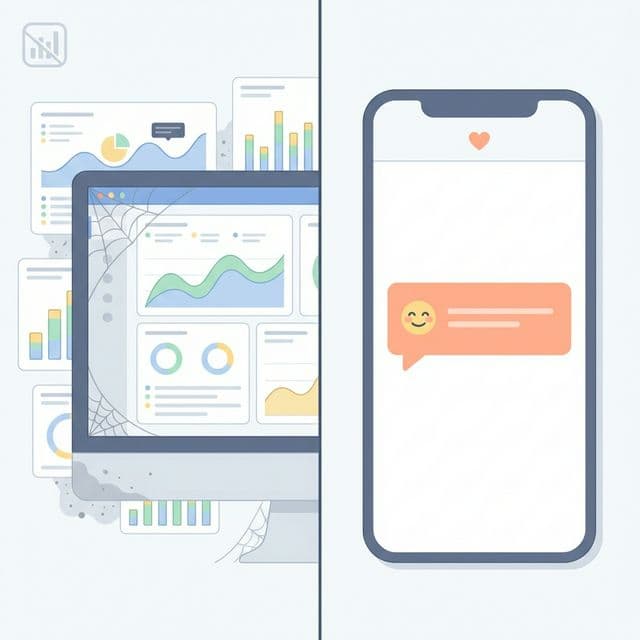
Traditional health apps treat you like a data-entry clerk for your own body. They give you charts and graphs and badges, but they never actually coach you. They're scorekeepers, not coaches.
Here's what passive tracking misses:
- No accountability. Nobody notices if you stop logging. The app doesn't follow up.
- No context. A calorie number doesn't explain why you skipped lunch or slept poorly.
- No adaptation. The app shows the same screens whether you're thriving or struggling.
- No motivation. After the novelty wears off, there's nothing pulling you back.
The result? You end up tracking about your health instead of actually improving it.
What Actually Works: Proactive Coaching
Behavior change research points to a few things that genuinely move the needle:
- Timely nudges. A well-timed check-in ("How was lunch?") is more effective than a generic end-of-day reminder.
- Conversational accountability. Telling someone — even an AI — what you ate creates a subtle but real sense of accountability.
- Personalized responses. Generic "great job!" messages feel hollow. Coaching that references your specific goals and patterns feels real.
- Low friction. The easier it is to engage, the more likely you'll stick with it.
This is exactly what proactive AI wellness coaching is designed to do. Instead of waiting for you to open an app, your coach texts you first. It checks in at the right moments throughout your day, asks specific questions, remembers your answers, and adapts its approach based on what's working.
The Difference in Practice
With a typical health app:
- You forget to log dinner → nothing happens
- You skip the gym → the app doesn't notice
- You feel stressed → no one asks how you're doing
With an AI wellness coach:
- Your coach texts you after your usual dinner time → you reply naturally
- You mention you skipped the gym → your coach asks what happened and adjusts
- You sound stressed in a message → your coach acknowledges it and adapts
The shift is subtle but powerful: instead of you managing the tool, the tool manages the relationship with you.
It's Not About More Data
You don't need another dashboard. You don't need more charts. You need someone — or something — that actually pays attention and responds.
The best wellness tool isn't the one with the most features. It's the one you actually use. And you're far more likely to use something that meets you where you already are: your text messages.
No app to open. No login to remember. No streak to feel guilty about breaking. Just a conversation that picks up where you left off.
Ready to try coaching that actually sticks? Get started free — your wellness coach will text you first.
Your wellness goals aren't going to achieve themselves.
Get an AI wellness coach that texts you first, remembers your goals, and keeps you on track — no app required.
Keep reading
Health as a Practice, Not a Project
Why do we treat our health like a 30-day challenge instead of a lifelong practice? Here's why shifting your mindset is the key to sustainable wellness.
Why Your Coach Texts You First: The Science of Proactive Check-Ins
Nudge theory, habit loops, and why a well-timed text from your AI coach is more powerful than any reminder app.